
 Japanese
 English
 Chinese
 Vietnamese

For foreigners attending a funeral in Saitama Shintoshin for the first time: Attire, belongings, and reception procedures.
Some foreigners invited to funerals around Saitama Shintoshin may feel anxious because they are unfamiliar with Japanese funeral etiquette. You don't need to know every custom from the start as long as you have respect for the deceased and their family. Carefully check the invitation and any communication from the family, and if you are unsure about something, don't force yourself to make a decision. It's important to quietly ask close relatives or those in charge of the funeral.
Even if you are attending from Omiya Ward, Chuo Ward, or Urawa Ward in Saitama City, the proceedings will differ depending on the venue and the style of the ceremony. While Buddhist ceremonies are common, there are also ceremonies that are not limited by religion or sect, as well as family funerals that focus on close friends and family. Avoid making assumptions about the religion or customs of attendees based solely on their nationality or place of origin. This article will explain general preparations and the flow of the day that will be helpful for first-time attendees.
First, calmly read the contents of the invitation.
Obituaries and notices may include the dates and locations of the wake, funeral/memorial service, procession, and cremation. You are not required to attend all of them. Prioritize the family's instructions regarding when you should arrive and the scope of attendance. If it is described as a family funeral, general attendance may not be accepted. If you have not received an invitation, it is best to confirm with the family or the person who contacted you whether it is acceptable to attend before going to the venue.
The term "funeral" can refer to the entire ceremony for bidding farewell to the deceased, or it can be used to distinguish it from a memorial service. If the schedule is unclear from the Japanese terminology alone, checking the following points will reduce confusion on the day.
- Date and time of attendance, and preferred arrival time.
- Venue name, reception location, and directions to the venue.
- Attending only the wake, only the funeral service, etc.
- Is casual attire acceptable, or would formal attire be preferable?
- Whether or not to accept condolence money
- Actions planned for the ceremony, such as offering incense and flowers.
- Will there be information regarding meals and participation in the cremation?
If it's difficult to ask in Japanese, you can use short sentences like, "I'd like to check the dress code," "Where is the reception?", or "By what time should I arrive?". There's no need to force yourself to give a complicated explanation; simply organize the points you want to confirm one by one.
Dress modestly and with an emphasis on cleanliness.
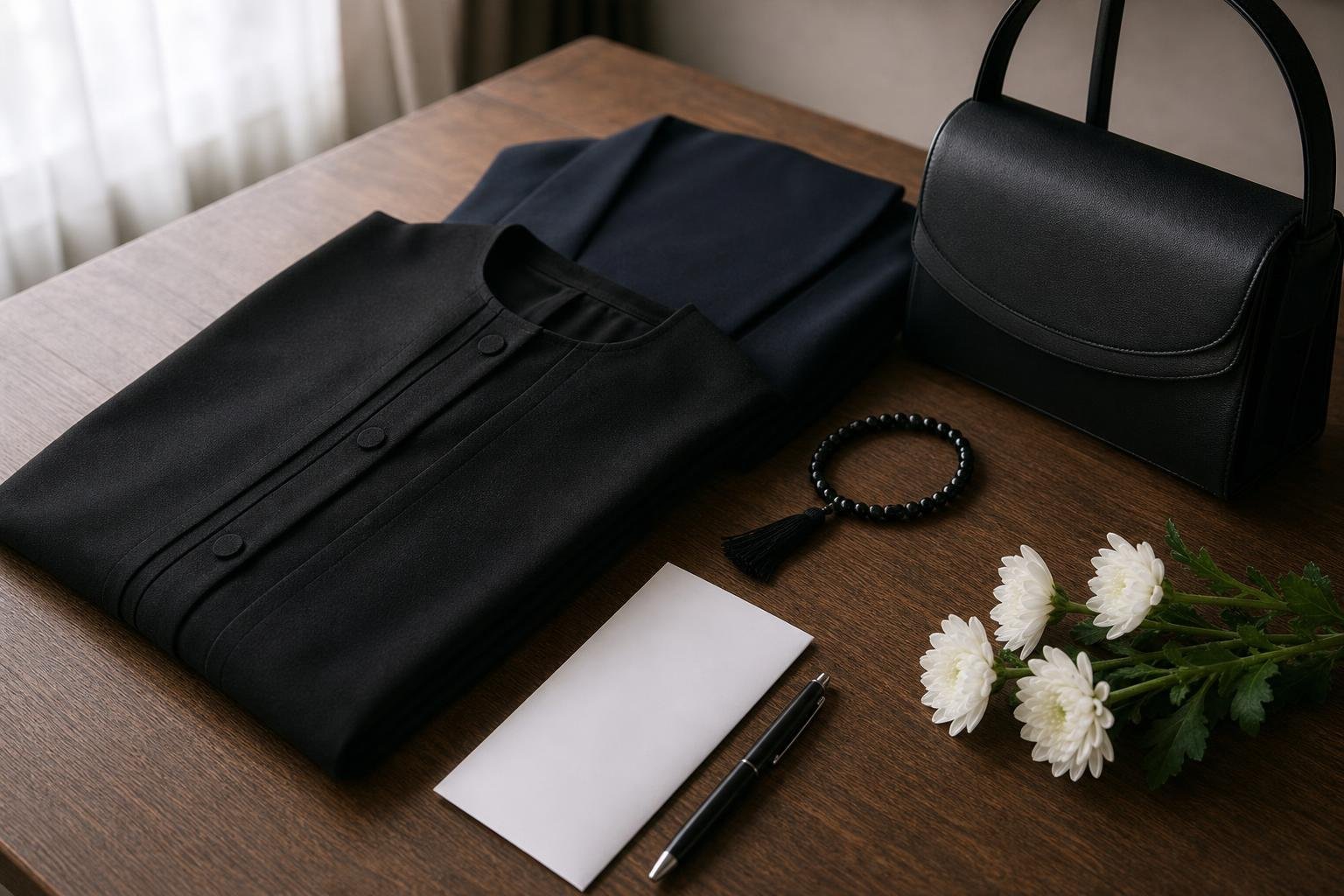
In Japanese funerals, it is common to choose subdued attire in colors such as black, dark blue, or dark gray, avoiding excessive shine or embellishments. Even if you cannot prepare formal attire due to a last-minute attendance, choosing clean, understated clothing is one way to show respect. If possible, it is best to avoid flashy patterns, large, conspicuous logos, and brightly colored jackets or shoes.
Men often choose dark suits, white shirts, and understated ties. Women typically opt for black or dark-colored dresses, suits, or minimally decorated attire. However, you are not obligated to adhere to gender dress codes. The basic principle is to wear something you feel comfortable in and that you consider appropriate for the occasion.
When it comes to accessories, makeup, and perfume, it's best to opt for understated elegance rather than flashy attire. If you wish to wear a hat or religious attire, checking with the bereaved family or venue beforehand will help you feel more at ease on the day. Comfortable shoes that are inconspicuous are ideal. Since you may need to remove your shoes at some venues, pay attention to your socks and footwear as well.
Prepare your belongings according to the instructions.
The items you need to bring to a funeral will vary depending on the invitation and the venue. First, keep the invitation handy to confirm the date, time, and location, and prepare anything you need for travel. It may also be helpful to bring a pen and paper in case you need to sign in at the reception.
Condolence money is a customary way of expressing condolences to the deceased by giving money or gifts. However, some families choose not to accept it. If the invitation states "condolence money declined," it is important to respect their wishes and not bring any. If the invitation does not specify and you are unsure whether to prepare anything, check with the bereaved family or someone close to them. There is no single rule regarding the amount or type of envelope to use. For first-timers, it is safer to check beforehand, as customs vary depending on the region and your relationship with the family.
While some people carry prayer beads at Buddhist funerals, not having them does not mean you cannot attend. However, some people avoid lending or borrowing prayer beads, so if you are unfamiliar with them, do not ask to borrow them and simply participate quietly in the ceremony. Before entering the venue, set your mobile phone to silent mode, and it is generally best to refrain from taking photos. Even if you have a compelling reason to take photos, always follow the instructions of the bereaved family and the venue staff.
The process from registration to being seated
Upon arrival at the venue, follow the signs and instructions from the staff to proceed to the reception. It's a good idea to arrive with some leeway to avoid rushing just before the start time. However, arriving too early may burden the bereaved family with preparations, so use the designated reception time as a guideline.
- Tell the receptionist your name and sign the guest book if requested.
- If you bring a condolence gift to a ceremony where it is accepted, hand it to the person at the reception desk with both hands.
- You may receive a thank-you gift or a program of the ceremony. If you are unsure, you can wait and see what others are doing before accepting yours.
- Please follow the instructions of the staff inside the venue and sit quietly in your designated seat or any available seat.
- Please refrain from checking your mobile phone until the session begins, and keep any conversations to a low voice.
There's no need to give a long explanation at the reception. You might say, "I'm so sorry for your loss," but if you're not confident in your Japanese, a slight bow and a short "My deepest condolences" will convey your feelings. If you can't find the right words, a deep bow is also perfectly acceptable.
During the ceremony, the basic rule is to "follow the instructions."
In Buddhist funerals, you may be asked to offer incense during the monk's chanting. The number of times and the procedure for offering incense vary depending on the sect and venue, so there is no need to think that "it must be done this many times." Stay calm and follow the instructions of the staff, observe what the person in front of you is doing, and if you are unsure, quietly ask for clarification. Some ceremonies involve offering flowers instead of incense.
There may be opportunities to view the deceased, say goodbye, and see them off as the coffin is carried out. Even if you are invited to participate, if you feel it would be too much of a burden on you, you are free to choose to quietly leave without forcing yourself. Rather than talking to the bereaved family for a long time, it is more helpful to offer your condolences briefly and, if necessary, offer your seat out of consideration.
Attending the cremation is only permitted if you are invited.
Cremation is an important time to say goodbye to the deceased, but not everyone is required to attend. Generally, only a limited number of people, such as close relatives, are allowed to participate. In Saitama City, the funeral facility and the crematorium may be separate. For example, Saitama City Hikari Kaikan is a funeral facility, while cremation takes place at Urawa Crematorium or Omiya Seien. Please follow the funeral service's instructions regarding which facility to use, whether attendance is required, and how to get there.
Even within areas close to Saitama Shintoshin, the routes to the venue and meeting places differ between Omiya Ward, Chuo Ward, and Urawa Ward in Saitama City. Do not proceed to the crematorium on your own; always confirm that you have been invited before taking any action. Facility usage conditions and the flow of movement on the day may change, so it is best to confirm with the venue or the person who sent the invitation.
Please be considerate when you leave.
If you need to leave the ceremony midway, do so quietly and discreetly. Not attending until the end is not necessarily rude. If you have work, childcare responsibilities, health issues, or language difficulties, it is important to express your condolences to the best of your ability. If you have the opportunity to speak with the bereaved family, avoid lengthy conversations and opt for short, gentle remarks such as, "Thank you for attending today's ceremony," or "Please take care of yourself."
It's perfectly normal to encounter unfamiliar customs at your first Japanese funeral. If you're unsure about things like attire, condolence money, reception procedures, incense offering, or who should attend a family funeral, please check the instructions and prioritize the wishes of the bereaved family. Seikatsu Funeral Service Center recommends calmly checking each point one by one, especially if you're a foreigner or family member and need to clarify points that are difficult to understand from Japanese funeral instructions. Above all, attending with feelings of mourning for the deceased and consideration for the bereaved family is the most important thing.
 Consult by Email
 Consultation /
 A Gentle Farewell