 Japanese
 English
 Chinese
 Vietnamese
Consult in Your Native Language or by Email
We provide support in your native language and by email so that you can consult us with confidence even if you do not speak Japanese. Supported languages are being expanded gradually.

Language
For funerals and family funerals in Saitama City and throughout Saitama Prefecture
At Seikatsu Funeral Service Center, we respect differences in language and culture
and carefully explain Japanese funeral customs and procedures.
We will recommend the best plan for your religion and preferences,
so please consult us about anything.
Email inquiries are available in all languages.

 Consult by Email
 Consultation /
  A Gentle Farewell
Available 24 Hours · Direct Line
* Phone support is available in Japanese only.
We provide support in your native language and by email so that you can consult us with confidence even if you do not speak Japanese. Supported languages are being expanded gradually.
Interpretation and translation support is available. We clearly explain the funeral process, required documents, and more.
We provide multilingual brochures and materials that take religious and cultural considerations into account, helping you make decisions with confidence.
 Family register, cremation permits, and otherRecommendations that respectReferrals to and arrangementsArrangements for funeral halls,From care of the deceased through the funeral
We respond promptly and reliably, 24 hours a day.

We respectfully care for your loved one at your home or a mortuary facility.

We recommend the best plan based on your wishes, religion, and culture.

We conduct the ceremony with care in accordance with your religion and customs.

We can also arrange meals and return gifts.

We provide full support for cremation and all required procedures.
* Prices vary depending on the plan and services selected.
Please contact us for details.

A simple plan consisting of cremation only. Recommended for those wishing to keep costs down.

A plan in which the farewell ceremony and cremation are held on one day without a wake, reducing the burden on the family.


A private plan for family and close friends, allowing for a warm and unhurried farewell.

* Prices shown are examples and vary depending on services, number of attendees, religion, officiant fees, venue, and other factors.
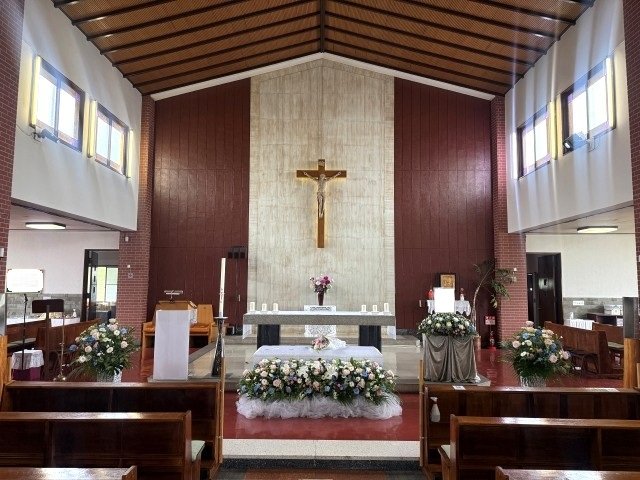
This is a summary of a family funeral case study published in May 2026. The venue was the Catholic Kita-Urawa Church, the format was a funeral mass and memorial service, and the service plan used was Plan A.

Seikatsu Funeral Service Center assists with funerals for people connected to many different countries and regions. After discussing differences in language, culture, and religion, we proposed a ceremony that reflected the family’s wishes.We used clear language a
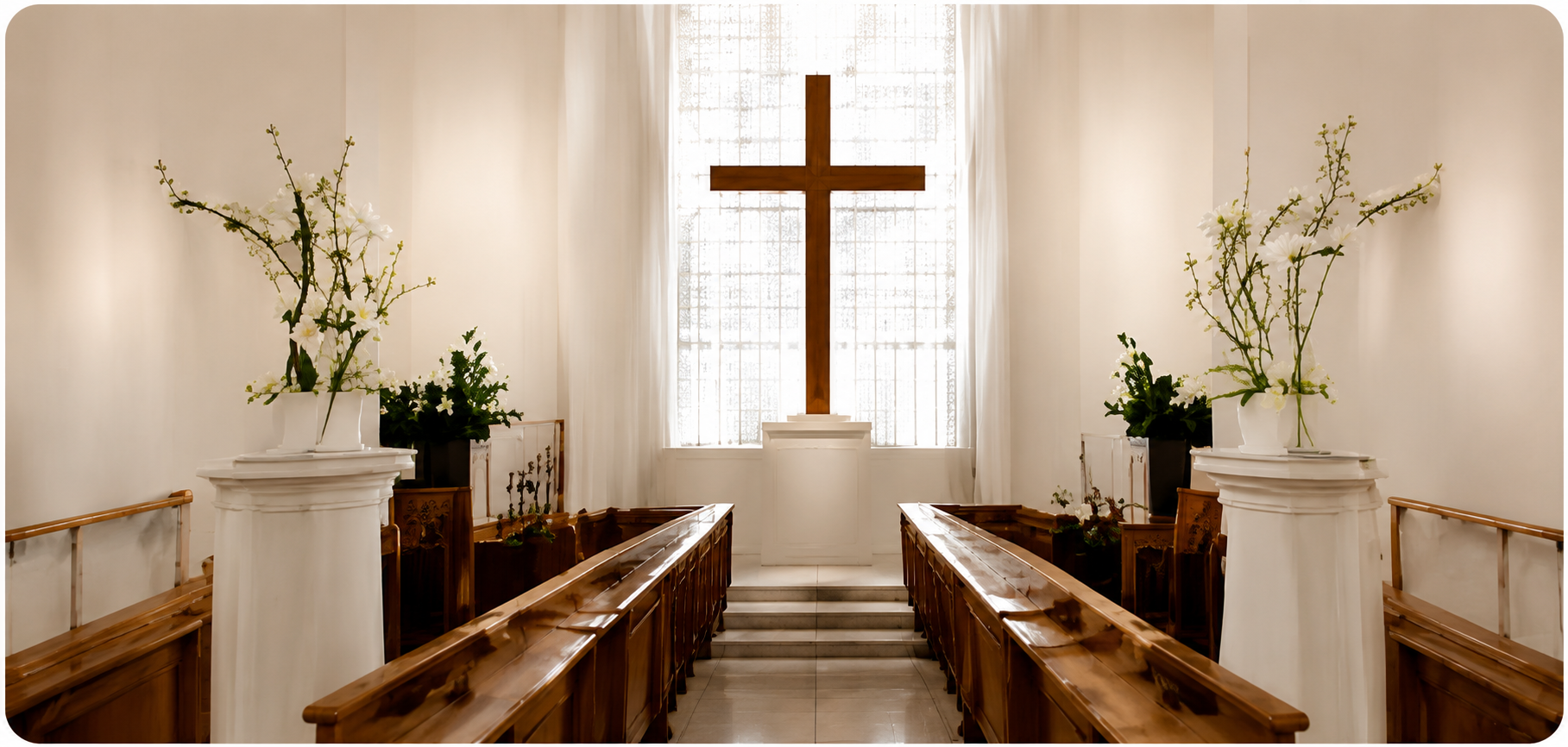
A family asked us to arrange a Christian farewell, and we assisted with the church service and the process through cremation.We coordinated with the church, pastor, and other parties regarding the order of service, hymns, flower offerings,
Arranging a funeral in Japan involves several time-sensitive procedures, including filing a Notification of Death, obtaining a cremation permit, and reserving a crematorium or funeral venue. When the deceased is a foreign national, additional steps may be required, such as contacting the relevant embassy or consulate, handling their residence card and passport, or arranging for the deceased or their cremated remains to be transported to their home country.
At Seikatsu Funeral Service Center, we guide you through each step in clear, easy-to-understand language while respecting differences in language, religion, and culture. You are welcome to contact us even if you have not made any decisions yet. Simply tell us what you do not understand or what is worrying you.
First, obtain the Death Certificate from the hospital or care facility and contact Seikatsu Funeral Service Center. Please tell us, as far as you are able, the name of the deceased, their current location, your name and telephone number, and where you would like them to be cared for. Our staff will collect the deceased from the hospital or facility and transport them to your home or a mortuary facility. Once your loved one has been placed in our care, you can take your time discussing the type of funeral, religious requirements, costs, and other details.
If the person had a regular doctor and the death was expected, contact that doctor first. If the death was sudden, may have resulted from an accident or suicide, or you cannot reach a doctor, call 119 or follow the instructions of the police. Do not move the deceased or tidy anything nearby until the authorities have completed their examination. Once a doctor has certified the death or any required police examination has been completed, a funeral company can transport the deceased and place them in appropriate care.
We accept calls concerning a death and requests to transport the deceased 24 hours a day. If a hospital or care facility asks you to arrange prompt collection, please call us first. We primarily serve Saitama City and the rest of Saitama Prefecture. Service in a particular municipality or long-distance transportation will be confirmed individually.
You may also contact us in another language by email or through our inquiry form, but we cannot guarantee an immediate reply 24 hours a day. Telephone support is currently available in Japanese only. If speaking Japanese by telephone is difficult, asking a hospital or facility employee, someone from your workplace, or a friend to assist with the call may help us make the arrangements more quickly.
Yes. You can consult us while someone is critically ill, while planning ahead for the future, or when you first begin considering international repatriation. Preparing information about the person's nationality, address, religion or denomination, preferred type of funeral, expected number of attendees, contact details for family overseas, passport and residence card, and whether repatriation is desired can reduce the burden in an emergency.
If the person has already died, you do not need to gather everything before contacting us. We can begin with only the name of the deceased, their current location, and your telephone number.
We will do our best to arrange a suitable date after checking crematorium and venue availability, the condition of the deceased, and space at the mortuary facility. If the funeral is delayed for several days, additional charges may apply for extra days of care, cooling measures, dry ice, and related services. We recommend confirming possible dates for the crematorium and funeral venue before booking flights. If some family members cannot travel to Japan, participation by video call may also be considered.
Yes. We use clear language and easy-to-understand materials, and we confirm important information with you one step at a time. Email inquiries are supported in 189 languages worldwide through our translation system. Our website also provides information pages in Japanese, English, Chinese, and Vietnamese.
If you require a human interpreter, please tell us your preferred language when you first contact us. Interpreter availability and any additional charge vary depending on the language, time, and nature of the consultation, and we will explain these details before the service is used. Telephone support is available in Japanese only.
We explain the funeral process, what is included in each plan, possible additional charges, and payment deadlines as clearly and simply as possible. We define unfamiliar specialist terms and can also share the details in writing or by email when needed. Information entered into a foreign-language inquiry form may be processed through our translation system so that we can respond. Please also provide important details such as names, addresses, and the name of the religion in the Latin alphabet.
Whether an interpreter or our translation system is used, we will confirm the final arrangements and total amount with the person placing the order before proceeding.
Family members overseas can contact us through our foreign-language inquiry form or by email. If you would like to hold a planning meeting by video call or arrange online participation or streaming on the day of the funeral, please tell us your preferred method and the countries from which people will join. We will check available equipment, the venue's internet connection and filming rules, consent from attendees, time-zone differences, and any associated costs before confirming what can be arranged. Important decisions should also be confirmed in writing between the representative in Japan and family members overseas.
You do not need to know Japanese customs in advance. We can explain what to wear, condolence money, incense offering, flower offering, the collection of cremated remains after cremation, and the overall schedule before the funeral. You do not have to follow every Japanese custom; the farewell can be arranged in a way that suits the religion and culture of the deceased and their family. Please speak with us if you would prefer not to offer incense, not to accept condolence money, or to replace a custom with flowers or prayer. We can also prepare a short guide for attendees.
Within the scope required for the funeral and cremation, we coordinate with hospitals, care facilities, funeral venues, crematoriums, and religious officiants. When the deceased is a foreign national, we can also help identify the organizations that may need to be contacted, such as their employer, insurer, embassy or consulate, and an international repatriation company.
Some official notifications, agreements, or consent forms must be completed by the family or another legally authorized person. Before sharing personal information or documents with an outside organization, we will confirm the purpose and recipient. Please attach an image of a passport to the inquiry form only when it is necessary.
Yes. Foreign nationality alone does not prevent a person from being cremated or having a funeral in Japan. The usual process is to file a Notification of Death (shibō todoke) with a Japanese municipal office, obtain a Cremation Permit (kasō kyokashō), and reserve a crematorium. Crematorium fees and reservation requirements vary depending on the deceased's address, the municipality, and the facility used. If you wish to arrange burial rather than cremation for religious reasons, please consult us as early as possible.
In Japan, a Notification of Death must generally be filed within seven days of learning of the death. The Death Certificate or Postmortem Examination Certificate completed by a doctor is submitted with the notification, after which the municipal office issues a Cremation Permit.
Seikatsu Funeral Service Center can confirm the required information and assist with the procedures for the Notification of Death and Cremation Permit. However, Japanese law limits who may be named as the person submitting the notification, and a signature or additional documents may be required.
Depending on the person's nationality and residence status, it may be necessary to contact their embassy or consulate, register the death in their home country, handle their passport, and return their Japanese residence card. If the deceased held a residence card or Special Permanent Resident Certificate, a relative or person who lived with them must generally return it within 14 days of the death. Required documents and deadlines vary by country, so first confirm the deceased's nationality and contact the relevant embassy or consulate promptly.
To begin, please prepare the Death Certificate or Postmortem Examination Certificate, the deceased's passport and residence card, proof of their address, and identification for the person contacting us. Information about health insurance, the employer, travel insurance, and life insurance may also be needed, as may documents showing the relationship to the deceased's closest relatives overseas.
Repatriating the deceased or their cremated remains may require additional documents, translations, certifications, or authentication. Before submitting any original document, check how many copies are required and whether the original will be returned.
Yes, please contact us first. If the deceased had no address in Japan or their closest relatives are overseas, we will confirm the identity of the person making the arrangements, their relationship to the deceased, and their authority to enter into an agreement and make payment before advising what assistance is possible. Whether a guarantor in Japan is required depends on the circumstances.
Coordination may be needed with the police, hospital, municipal office, embassy or consulate, travel insurer, employer, or travel company. A friend or employer in Japan may serve as the local point of contact, but their role and legal authority must be confirmed for matters such as filing the Notification of Death and taking custody of the deceased or their cremated remains.
The main options are a cremation-only funeral or direct cremation, a one-day funeral, and a family funeral. A cremation-only funeral or direct cremation centers on the cremation without holding a wake or formal farewell ceremony. A one-day funeral includes the farewell ceremony and cremation on the same day, without a wake. A family funeral generally includes a wake and farewell ceremony attended mainly by family and close friends.
Other arrangements, including a service at home, in a church, or at another religious facility, may also be possible. We will recommend an option after discussing the number of attendees, religious requirements, the travel schedule of people coming from overseas, and your budget.
In Japan, except in special circumstances, cremation cannot take place within 24 hours of death. The actual date depends on the availability of the crematorium, funeral venue, and religious officiant, as well as the arrival of family members from overseas and the condition of the deceased. During busy periods, it may be necessary to wait several days or longer.
Until the funeral, the deceased will be cared for at home or in a mortuary facility. If the number of days increases, additional charges may apply for use of the facility, dry ice, or other cooling measures.
Consultations and estimates are free. The estimate will show which items are included in the plan and which are charged separately, including transportation, care of the deceased, cooling measures, the coffin, placement in the coffin, ceremony staffing and coordination, the altar, and transportation to the crematorium.
Common additional charges include transportation beyond the included distance, extra days of care, venue and crematorium fees, honoraria for religious officiants, meals, return gifts, flowers, interpreting or document translation, and international repatriation. If the number of attendees or the schedule changes, please ask us to confirm the revised total. If an arrangement is changed or canceled after an agreement has been signed, charges may apply for goods or services that have already been ordered or provided.
Payment methods and deadlines will be explained individually when we review the estimate and agreement with you. Please discuss options such as bank transfer with us according to your circumstances. Public facility charges, honoraria for religious officiants, beverages, and certain other expenses may need to be paid before the funeral or by the day of the service.
If you wish to pay by credit card, in installments, or by international bank transfer, please confirm before signing the agreement whether the method is available, which currencies are accepted, what transfer fees apply, and the payment deadline.
Depending on your circumstances, total costs may be reduced by choosing a cremation-only or one-day funeral, limiting the number of attendees, using a public funeral facility, or adjusting the meals, return gifts, and flowers. Some expenses, such as long-distance transportation or additional days of care, may be difficult to reduce.
If the deceased was enrolled in Japanese health insurance, the applicable scheme may provide a funeral expense or burial allowance. Eligibility depends on their insurance coverage and the applicant's circumstances, not nationality alone. Please check with the municipal office, health insurance association, or employer. Keep all receipts in a safe place.
Yes. We can discuss Buddhist, Shinto, Christian, nonreligious, and other types of funerals according to your wishes. For an Islamic, Hindu, or other religious funeral, we will ask about required prayers, the direction in which the deceased should be placed, who may touch the body, ritual washing, clothing, food, and other observances. We will then confirm what we can accommodate and whether coordination with a specialist is needed.
If a requested practice cannot be carried out because of Japanese law or the rules of a religious facility, funeral venue, or crematorium, we will ask what the practice is intended to honor and work with you to consider an appropriate alternative.
After confirming the religion, denomination, and your wishes, we can discuss introducing or arranging a Buddhist monk, Christian minister, Shinto priest, or other religious officiant. If the deceased or family already belongs to a religious institution or organization, please provide its contact details and explain which rites you would like performed. For other faiths, we will confirm individually whether we can introduce an officiant or coordinate with the relevant people.
An officiant's honorarium, travel expenses, donation, or offering may be separate from the funeral charges. If a particular language is required, please tell us as early as possible.
In Japan, burial is permitted only in an authorized cemetery, and relatively few cemeteries accept burial without cremation. It is necessary to confirm acceptance with a suitable cemetery, a specialist provider that handles burial, and the relevant embassy or consulate.
After confirming what assistance Seikatsu Funeral Service Center can provide, we can also consider alternatives such as repatriating the deceased to their home country or cremating them in Japan and transporting the cremated remains overseas. Burial and international repatriation involve many checks and procedures, so we recommend consulting us as early as possible.
Wherever possible, we will help you prepare national or traditional dress, clothing required by the person's religion, letters from family, photographs, flowers, and other meaningful items. Crematoriums do, however, prohibit certain objects from being placed in the coffin. These often include metal, glass, ceramics, batteries, electronic devices, large amounts of plastic, and hazardous materials.
Before preparing clothing or keepsakes, please allow us to check the rules of the crematorium. Tell us about any religious requirements for washing, dressing, or placing the deceased in the coffin before care begins.
Please tell us if you would like to include music, prayers, flower offerings, video, a national flag or other decorations, special food, or photography. We will check the rules of the funeral venue and crematorium, safety requirements, available suppliers and equipment, and then explain what can be arranged and how much it will cost.
For guests with allergies or who require vegetarian or halal food, we will confirm suitable catering options individually. Rituals involving fire or incense, loud sound, eating and drinking, and photography of the deceased or cremation equipment may be restricted by the facility. Consent from the family and attendees is also required for photography or streaming.
We accept inquiries about international transportation and repatriation. Whether repatriation is possible, and which parts of the process Seikatsu Funeral Service Center can handle, will be explained after checking the destination country, airline, any transit country, and insurance conditions.
Depending on the circumstances, the required items may include a Death Certificate or Postmortem Examination Certificate, official proof of death, the deceased's passport, documents from the embassy or consulate, translated documents, embalming, waterproof or hermetic preparation, and a coffin suitable for international transport. If an international repatriation specialist is required, we will also clarify which organization is responsible for each part of the process.
Yes. We also accept inquiries about transporting a deceased person from another country to Japan. Whether this is possible depends on the procedures in the country where the death occurred and in Japan, available flights, and the receiving arrangements in Japan.
Coordination may be required with the local hospital or police, a Japanese embassy or consulate, the insurance company, airline, and local funeral company. An international repatriation specialist may therefore be required. We will explain which parts Seikatsu Funeral Service Center can handle and which parts need to be entrusted to a specialist.
In many cases, yes. However, required documents and transportation rules vary according to the destination country, airline, and any transit country. You may be asked for proof that cremation has taken place, a cremation certificate, official proof of death, or translated documents. Please also ask the airline in advance about acceptable urn materials and packaging, and whether the urn should be carried in the cabin or checked as baggage.
Because there may not be enough time to prepare the documents immediately before departure, please tell us about your return travel plans before the cremation.
If you wish to divide the cremated remains so that memorial observances can take place both in Japan and overseas, please tell us before the cremation. Depending on where each portion will be placed, a Certificate for Divided Remains or another document may be required.
Seikatsu Funeral Service Center can also discuss after-funeral memorial options, including introductions to temples, memorial care for cremated remains, tree burial, and scattering ashes at sea. Consider the family's religion, future plans to leave Japan, and who will be able to care for the remains. You do not need to make this decision immediately.
Yes. Depending on the deceased's circumstances, procedures may be required for returning their residence card, notifying their embassy or consulate, health insurance and pension matters, their employer, bank accounts, mobile telephone contract, housing, utilities, and insurance claims. Depending on the surviving family member's residence status, they may also need to notify Japanese immigration authorities of the death of a spouse.
We provide funeral receipts and cremation-related documents and help you identify which organizations to contact. You can also consult us about storing or interring the cremated remains, introductions to temples, memorial services, tree burial, scattering ashes at sea, Buddhist altars and ritual items, and later memorial observances. For inheritance or immigration-status matters, please consult an appropriate specialist, such as an administrative scrivener, judicial scrivener, or attorney, when necessary.

For foreign families in Saitama City considering applying for funeral expense reimbursement, this guide explains the National Health Insurance system, the eligibility requirements and required documents, and how to manage the process when handling funeral and cremation arrangements concurrently.
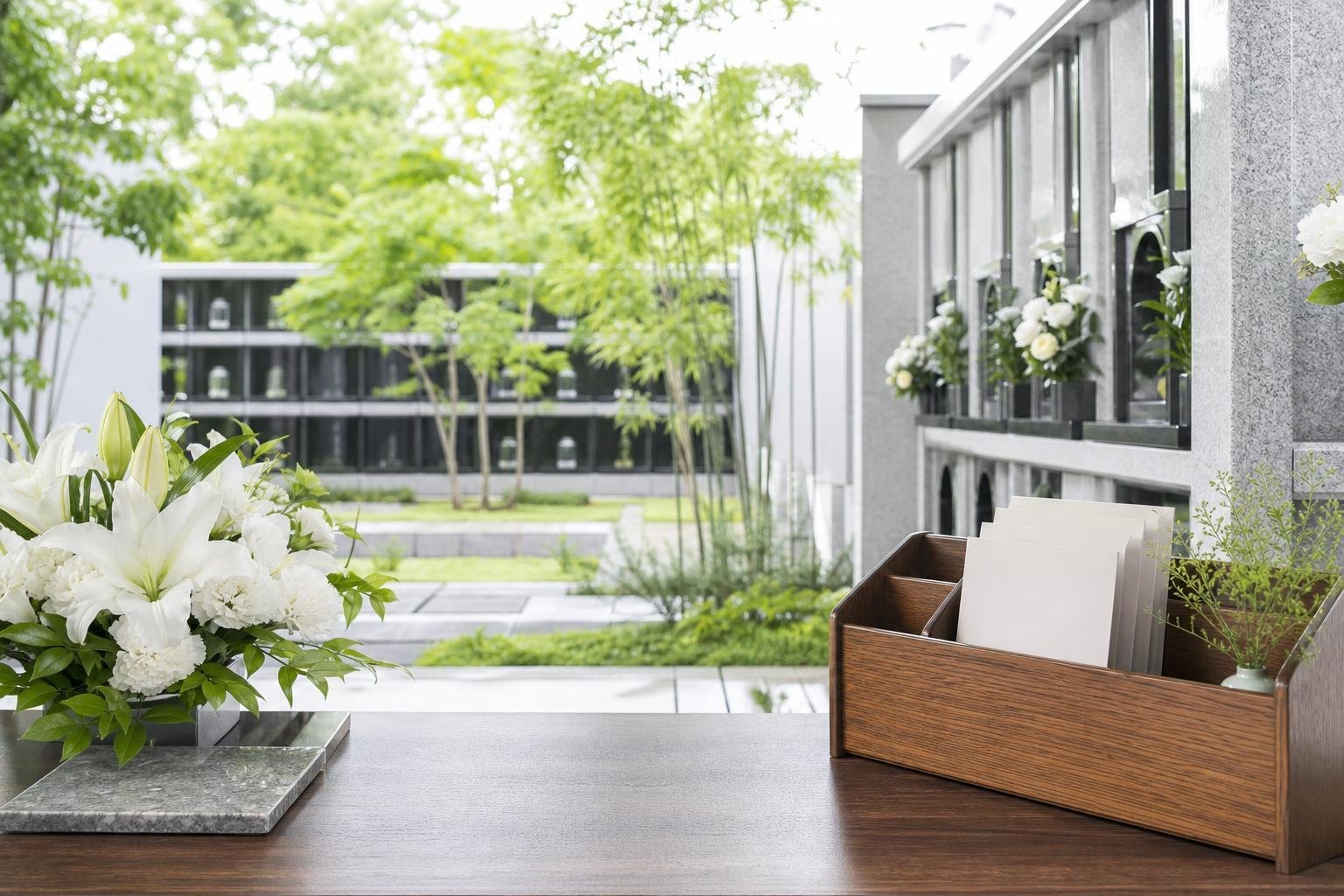
For foreigners and their families in the Omiya area considering perpetual memorial services, we will organize information regarding contact methods after returning to Japan, cost breakdown, contract details, and connections to funeral and cremation services.
This article explains what to consider when choosing a place to keep a deceased loved one at home in Ageo City, the process from funeral to cremation, and how to share information with family members living overseas.
Consult by Email
Consultation / A Gentle Farewell