
 Japanese
 English
 Chinese
 Vietnamese
I want to use offerings and paper money from my home country at a funeral in Kawagoe City | Venue rules and alternative methods
When saying goodbye to a loved one, it is natural and important to want to prepare offerings and paper money that have been passed down in one's home country. On the other hand, funeral halls and crematoriums in Japan may have rules regarding what can be brought in and what can be done on the day of the funeral, for safety management, hygiene management, equipment maintenance, and consideration for others.
When planning a funeral in Kawagoe City, it's important not to jump to conclusions like "we can't do what we've always done," but rather to clearly communicate your wishes and confirm how each venue handles them. Even for small, intimate family funerals, a small venue doesn't necessarily mean you can do whatever you want. By consulting in advance, you can work together to find a comfortable and respectful arrangement that takes your feelings into consideration.
First, let's clarify "what we want to do and when" with offerings and paper money.
Simply stating "I want to use paper money" or "I want to place offerings from my home country" may not be enough for the venue to make a decision. Before proceeding with preparations, it's best to organize your family's wishes as specifically as possible to ensure a smooth consultation.
- Please specify the type, quantity, size, and packaging of the items you wish to offer.
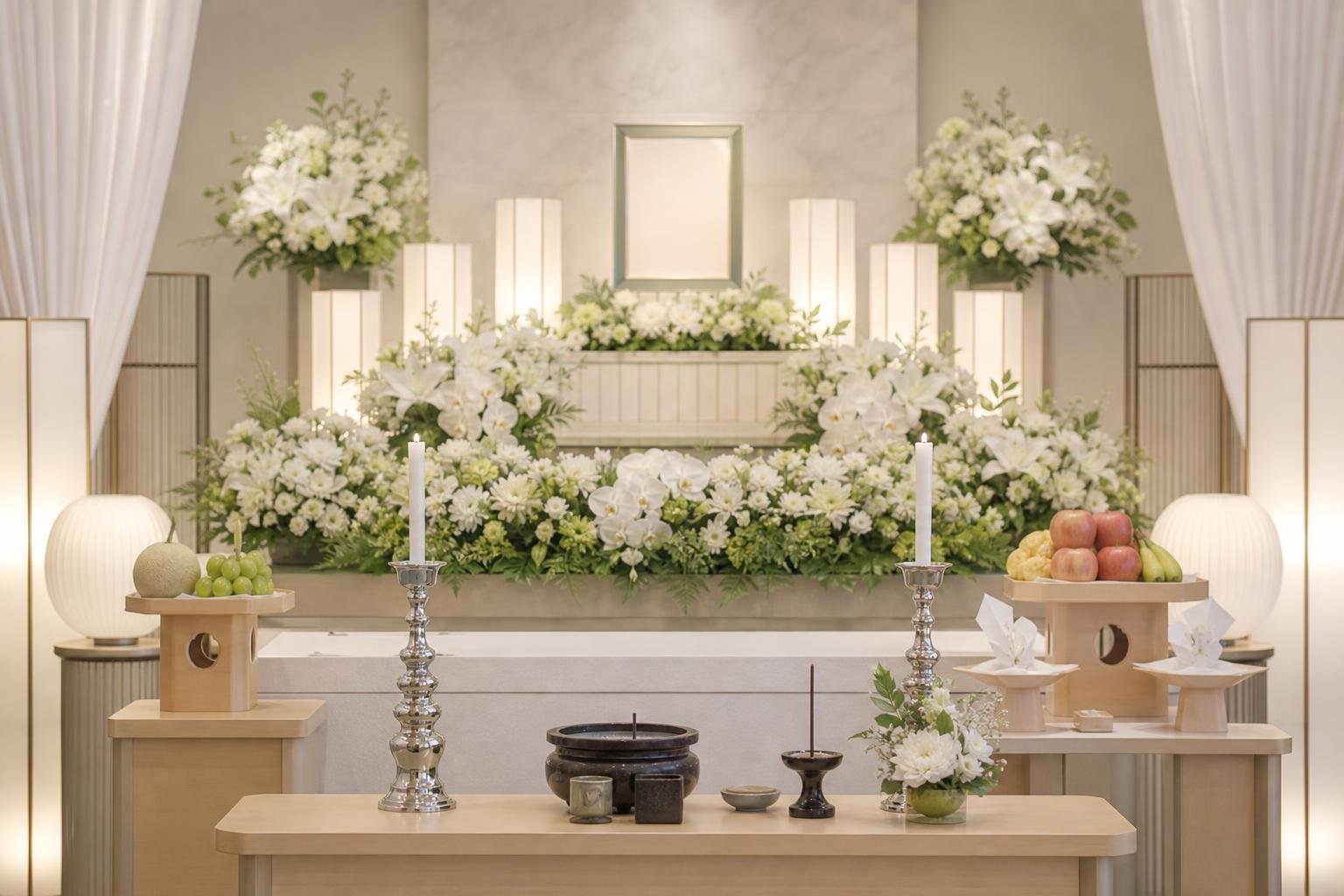
- Place it wherever you like: near the altar, inside the ceremony hall, in the waiting room, etc.
- Do you want to keep it beside the deceased, or do you want the attendees to see it?
- Do you wish to display the paper money, or do you want to burn it?
- You can choose to perform the funeral service at any time you like, such as before the funeral, during the ceremony, or before the coffin is taken out.
- Are there any items you would like to take home or dispose of after the ceremony?
Even with the same paper money, some people value offering it as a way to express their feelings for the deceased, while others want to follow specific rituals. Offerings also vary widely, including food, drinks, fruit, flowers, and handmade items. Since the meaning differs depending on religion, region, and each family's beliefs, don't decide based on general explanations alone; try to articulate what is important to your family.
The rules for the venue should be checked not only with the funeral home but also with each individual facility.
Your wishes regarding the funeral should first be communicated to the funeral home. However, the funeral hall, mortuary, and crematorium you actually use may each have their own management rules. Whether your wishes can be fulfilled depends not only on the content of the ceremony, but also on the venues used and the operational status on the day.
In particular, burning paper money may not be permitted within the funeral hall or on the premises due to concerns about fire, smoke, ash, odor, impact on fire alarm systems, and consideration for neighbors and other users. Restrictions may also be placed on the materials and quantities of items placed in the coffin, considering safety during cremation and the impact on equipment. Avoid making assumptions such as "any combustible material is acceptable" or "a small amount is fine."
Saitama City has a crematorium called Omiya Seien, and it is stated that in addition to reservations, preparations such as bringing a coffin and transportation are necessary when using the crematorium or funeral hall. However, the rules regarding what can be brought in and how it is handled cannot be directly applied to other regions or other facilities. Regardless of whether you are holding a funeral or cremation in Kawagoe City, Ageo City, Saitama City, or any other area, it is best to check individually with the facility you plan to use.
Things to mention when confirming
When consulting, it is helpful to have information such as the name of the item, as well as photos, size, material, and quantity. If you only know the name in a foreign language, there is no need to force a translation into Japanese. Explain the purpose of the item and confirm it with a translator if necessary.
- Is it possible to bring it into the venue and set it up near the altar?
- Containers, storage, and handling of food and beverages when they are offered.
- Can we distinguish between displaying paper money and burning it?
- Confirmation of the items to be placed in the coffin, their quantity, and the timing of their placement.
- How to handle ashes and paper after the ceremony
- Can we allocate time for explanations and proceedings on the day of the event?
Even if our investigation reveals that we cannot fulfill your wishes exactly as planned, this does not negate your family's culture or wishes. It can be seen as a starting point for finding a way to honor the deceased while adhering to the venue's safety and usage conditions.
Even if it's difficult, there are alternative ways to turn your ideas into reality.
Even if using fire or placing the deceased in a coffin is difficult, there are ways to preserve the meaning behind the ritual. The important thing is that even if some of the formalities change, the respect for the deceased and the family's prayers are not lost.
- The paper money is not burned, but placed on the altar or farewell table for a certain period of time, and then taken home after the ceremony.
- Display only a small number of the actual items, and quietly offer your prayers as your family sees you off.
- Instead of bringing food into the venue, you can express your feelings with photos, drawings, or items that remind you of the deceased.
- Offer the deceased's favorite foods and drinks in small portions according to the facility's rules, or remember them at the family dinner table.
- Share the meaning of your desired rituals with the master of ceremonies and close relatives, and set aside time for a moment of silence and verbal farewells.
- The family should discuss again about a suitable time and place to hold the ceremony outside the funeral venue, rather than on the day of the funeral.
However, even with alternative methods, you will need to check with the venue. Even if you are only decorating, there may be rules regarding the placement, quantity, food management, and cleanup. Don't assume it's okay just because you're not burning anything; be sure to get permission beforehand.
When there are differences of opinion within the family, we share what we prioritize.
Family members, including relatives living abroad, may have different views on funeral customs. For some, paper money is essential, while others might be very concerned about causing inconvenience to others at a funeral venue in Japan. These differences of opinion can become a burden when preparing for a funeral, which often requires quick decisions.
In such situations, instead of just discussing "what needs to be done," try sharing "what feelings you want to convey to the deceased" and "how you want to communicate with relatives who cannot attend." By separating the purpose into offerings, display, prayer, and family gatherings, you may be able to find a form that is acceptable to everyone.
If time is limited, it can be helpful to narrow down your priorities to about three things. For example, you could decide to offer one item that represents the deceased, have family members say their goodbyes in their native language, and prepare paper money in a safe manner. Don't try to accomplish everything at once; start by discussing what is most important to you.
Please feel free to tell us your wishes regarding Seikatsu Funeral Service Center.
Seikatsu Funeral Service Center provides support for interpretation and translation, as well as guidance on respecting religious and cultural sensitivities. Regarding offerings and paper money, we do not judge solely by their names, but instead ask about what is important to you and in what situation you wish to perform them, and then clarify any points that need to be confirmed. Since the feasibility of individual arrangements and usage conditions vary depending on the venue and content, prior consultation is essential.
Whether you're consulting with us about funeral arrangements in Kawagoe City, Ageo City, or Saitama City, please don't hesitate to express your wishes, including any cultural background considerations. Preparing for a family funeral, a general funeral, or cremation can involve many unfamiliar terms and procedures, which can be anxiety-inducing. By confirming your wishes one by one and distinguishing between what's feasible and what needs adjustment, you can calmly proceed with the preparations for saying goodbye.
The desire to cherish one's homeland's customs and the need to abide by the rules of the Japanese venue are not conflicting. Discussing this in advance and finding a way to express your feelings that is comfortable for your family will lead to a more respectful and meaningful farewell to your loved one.
 Consult by Email
 Consultation /
  A Gentle Farewell