
 Japanese
 English
 Chinese
 Vietnamese
How much money should you give as a condolence gift at a funeral in Ageo City? Foreigners often get confused about the amount, envelope, and how to present it.
When attending a Japanese funeral for the first time, many people are unsure about how much money to give as a condolence gift and which envelope to choose. Condolence money is money given to express grief for the deceased and sympathy for the bereaved family. However, there is no rule that says you must give the same amount every time. Even in funerals in Ageo City, the appropriate amount varies depending on your relationship with the deceased, your own position, and the customs of your region or workplace.
For foreigners, not only the language but also the unique Japanese customs such as envelopes, envelope inscriptions, and interactions at the reception can be a source of anxiety. Rather than rushing into decisions without knowing what to do, it's reassuring to check with close family members, colleagues, or the person who guided you through the funeral arrangements. Here, we introduce some basic points to check that will be helpful when attending a funeral in Ageo City, Okegawa City, Ina Town, and other areas.
Condolence money is not a fixed amount, but rather something that should be considered based on the relationship with the deceased.
There is no fixed amount for condolence money given nationwide. The general perception varies depending on the relationship with the deceased and their family, such as whether they are relatives, friends, colleagues, or neighbors. Furthermore, even within the same relationship, the appropriate amount may differ depending on age, workplace customs, and whether the money is given collectively by multiple people.
Therefore, it is not recommended to simply apply price examples found online. If you are unsure of the price, first calmly check the following points.
- What was your relationship with the deceased? Was it a relative, friend, acquaintance, or colleague?
- Is there a custom in your workplace or organization of having multiple signatures or coordinating signatures?
- Do your family members or close friends know the local customs?
- Are you planning to attend only the wake, only the funeral/memorial service, or both?
- Have you already expressed your condolences in another way, such as by sending flowers or a telegram?
If you receive instructions from your workplace, you can also ask your colleagues, "How is everyone else doing it?" Asking questions is not rude. It's important to show respect and seek clarification when you're in an unfamiliar culture.
Choose a bag after confirming the religion and customs.
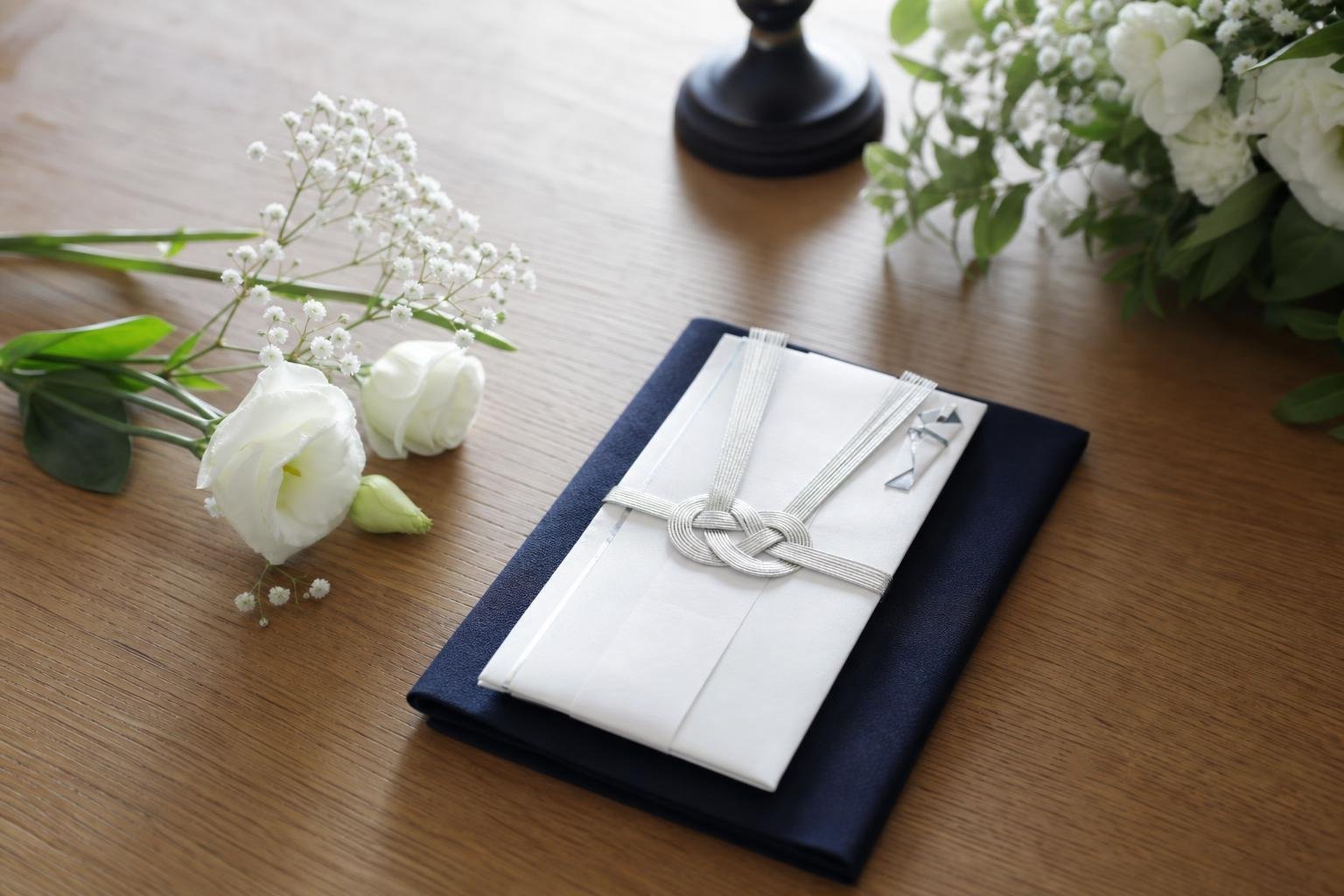
For condolence money, a special envelope called a "fushugi-bukuro" (mourning envelope) is generally used. However, there are several types of decorative cords and inscriptions on these envelopes, and the appropriate one may vary depending on the religion, sect, and style of the funeral. If the invitation includes information about the religious style, please check it. If there is no such information or if you are unsure, it is best to ask the funeral home or the person in charge of guiding the bereaved family what kind of envelope is appropriate.
The front of the envelope has a space to write a phrase indicating the purpose and the name of the person giving the gift. The wording on the envelope may vary depending on the religious custom, so it's best not to choose without understanding its meaning. Knowing the type of funeral will make it easier to get advice when purchasing from a stationery store.
When multiple people contribute to a condolence gift, be sure to check how and whose name should be written. If the contribution is made by a workplace group, the name of the representative may be used, but it's best to follow the instructions of the person organizing the contribution rather than making your own decision. When attending as a couple or family, whether to combine the contributions as a family or prepare individual contributions should be decided based on the relationship and the instructions given.
How to prepare cash and put it in a bag
When enclosing cash as a condolence gift, use the inner envelope provided with the main envelope if available, and check that it has spaces to write your name, address, and the amount. It is important to write legibly, as this will help the bereaved family later identify who gave the money. If you have difficulty writing Japanese kanji, you can ask the person guiding you if it is acceptable to write your name in Roman letters.
You may hear of people avoiding new banknotes, but there are various interpretations of this. There's no need to be overly anxious based solely on the condition of the banknotes you have on hand. The most important thing is to prepare them carefully and in a clean condition, showing your condolences to the deceased and their family.
A short and polite way of handing it over at the reception desk is sufficient.
Upon arriving at the venue, first check the location of the reception. In family funerals, general attendance may not be accepted, or only those who have received an invitation may attend. Just because it's a family funeral doesn't mean that a monetary gift (koden) is always unnecessary or always necessary. Check in advance whether there is any mention of "declining monetary gifts" in the invitation or communication from the bereaved family. If there is a notice declining gifts, respect their wishes.
When handing over the condolence money at the reception, if you have brought the envelope in a fukusa (a type of cloth wrapper), take it out, arrange it so that the recipient can read it, and offer it with both hands. If you don't have a fukusa, it's a good idea to carry the envelope in a clean envelope or small case to prevent it from getting dirty or folded. There is no need to give a long explanation at the reception.
"My deepest condolences."
"My deepest condolences."
As you can see, even a short message is enough to convey your feelings. If you are not confident in your Japanese, simply bowing slowly and handing over the condolence money will convey your feelings. If you are asked to sign the guest book at the reception, write your name and address. Make sure to write legibly and include information that will be needed if you need to be contacted.
The process leading up to cremation and the timing of giving condolence money.
In Japanese funerals, the typical sequence is a wake, funeral/memorial service, and cremation, but the dates and details vary from case to case. Even if you are attending from Ageo City, Okegawa City, or Ina Town, be sure to follow the instructions regarding the venue, start time, and whether or not you will accompany the deceased to the cremation. Since cremation is often attended mainly by close relatives, it is important not to accompany them if you are not specifically invited.
Condolence money is usually given at the reception of the first funeral service you attend. Even if you attend both the wake and the funeral/memorial service the following day, it is not always necessary to give the same condolence money twice. If you have already given it at the wake, it is best to check with the reception before giving it again the next day. In small family funerals where there is no reception, the place and method of giving the condolence money may differ.
Three things to prioritize when you're unsure
- Please check the wording of the instructions.Make sure you don't overlook details such as whether or not you can attend, whether or not condolence money will be declined, the venue, and the start time.
- Ask someone you know or a guide.The amount, type of envelope, and method of listing names vary depending on the region and relationship.
- Don't try to force yourself to act according to customs.It is most important to politely ask questions about anything you don't understand and to act calmly.
A funeral is not so much a time to perfectly follow formal procedures, but rather a time to remember the deceased and offer sympathy to the bereaved family. It is natural to be unsure about the amount of money to give as a condolence gift and how to choose the right envelope. When you receive information about attending a funeral, a family funeral, or cremation in or around Ageo City, please prioritize individual circumstances and the wishes of the bereaved family. Seikatsu Funeral Service Center can also help you organize the points you should check in advance by following the information provided to find out who to consult.
 Consult by Email
 Consultation /
  A Gentle Farewell